THE GAPS DIET

Natural Digestive Healing

FAQs

Here are some of the common questions we have received.  Please contact us if you have something you think should be added.

What are "die-off" symptoms?

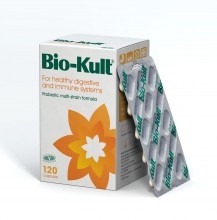
    As you introduce a probiotic into the digestive system, the pathogenic bacteria, viruses and fungi there will be dying, which releases more toxins.  This increase in toxicity may produce a so-called "die-off" reaction, when you may feel more tired or generally "off color".  It is a temporary reaction and usually lasts from a few days to a few weeks in different people.  To make this reaction as mild as possible, build the dose of Bio-Kult slowly.  The quickest you can go is adding 1 capsule to the daily dose every 4-7 days.  You can build the dose much slower, depending on your reaction.  If you get a severe reaction, cut the daily dose down to the previous level and settle on it.  Then carry on increasing the dose.


Why do my symptoms seem to be getting worse on the GAPS diet and Bio-Kult
?
    
    Die-off releases more toxins than usual.  Your symptoms may get worse initially but this is a temporary reaction and will pass.  Build up the Bio-Kult very slowly to decrease this response.  If the Full GAPS Diet is causing your symptoms to get worse with no gradual improvements, it is recommended to go back and follow the Introduction Diet.


What should I do if I get a "tummy bug" while on the diet
?

     If you or your child gets a "tummy bug" or any other kind of diarrhea remove all nuts, raw vegetables and raw fruit out of the diet.  Stay on a low fiber diet: meat stock, meats, fish, eggs, fermented dairy and cooked vegetables (skinned, de-seeded and well cooked with meats as soups and stews) and cooked fruit until diarrhea completely clears.  After stools stay normal for a week at least, re-introduce raw fruit and vegetables slowly, one at a time and starting from small amounts.


Why is bicarbonate of soda for baking not recommended in the GAPS diet
?

    GAPS patients almost invariable have low stomach acid production.  Bicarbonate of soda is a strong alkali and will reduce the stomach acid even further.  Please, read the chapter 'Digestive Enzymes' in order to fully understand this issue.


Will my child get enough calcium on the GAPS diet?  Do we need to supplement calcium?

    There is plenty of calcium in nuts, particularly almonds, meat broth and vegetables.  When fermented dairy are introduced there will be even more calcium in the diet.  Calcium has to be balanced with other minerals, particularly with magnesium.  Supplemental calcium usually causes deficiencies in many other minerals, as it chelates them and does not allow them to be absorbed.  That is why Dr. Campbell-McBride does not recommend calcium supplements.  When you get calcium from natural foods you get it in combination with many other minerals and other nutrients, which allow the body to use them all appropriately.

    Calcium works in opposition to magnesium in the body.  GAPS patients are usually deficient in magnesium.  Supplementing calcium will make that deficiency worse with serious consequences.


Dr. Campbell-McBride advocates eating animal fats and cholesterol-rich foods.  What about heart disease?

    To understand fully how and why heart disease develops please read her book, "Put your heart in your mouth! What really is heart disease and what we can do to prevent and even reverse it."  The idea of fats and cholesterol-rich foods "causing" heart disease and other manifestations of atherosclerosis stems from an infamous Diet-Heart Hypothesis, first proposed in 1953.  Since then the science and clinical experience has proven this hypothesis to be completely wrong.  However, since 1953 a large political and commercial machine has been built based on this hypothesis: these powers do their best to keep the mistaken diet-heart hypothesis alive for as long as possible.  It has been proven that natural animal fats, dairy fats, eggs, fresh fish and other natural sources of cholesterol have nothing to do with heart disease and are essential to health.  It has also been proven that all artificial fats vigorously promoted to the population, such as all cooking and vegetable oils, margarines, butter replacements and other processed fats cause heart disease, cancer, diabetes, psychiatric and neurological disease and many other health problems.  GAPS patients require a lot of natural fats and natural cholesterol in their diet in order to restore their brain function and immune function.


Is there anything you can do to reduce Candida in the mouth (thrush)?
    
    It is important to populate the mouth and throat with beneficial bacteria.  To do this, take a mouthful of yogurt, kefir or 2 opened Bio-Kult capsules on the tongue after everything you eat.  Do the same thing at bedtime after you have cleaned your teeth and do not plan on eating or drinking anything else.


Any special recommendations for pregnant women?
     
    For pregnancy, the diet is very important.  The birth canal also needs to be prepared for birth by populating it with beneficial bacteria.  To do that, apply live yogurt or kefir on your genital area after you bathe, particularly in the last trimester.  Also apply kefir or yogurt on your breasts and armpits.  Every 2-3 weeks, insert 1-2 capsules of Bio-Kult in the vagina at bedtime, particularly if there are any unpleasant symptoms in that area.


Can Bio-Kult be given to infants?
    
    Probiotics are safe at any age.  New born children get their first dose as they emerge through the vaginal canal and further inoculations from sticking dirty fingers into their mouth.  The dose needed for an infant is basically enough to get through the stomach - 1 or 2 capsules daily is probably enough in most cases.  You can't overdose - you just won't get any extra benefit from giving more than is needed and it will cost more! 


Who should take Betaine HCl with Pepsin?

     Not everyone should take Betaine HCl right from the beginning, particularly children.  In many GAPS people, stomach lining can be too sensitive to tolerate it.  Usually for children it is not recommended at the beginning at all; later on if there is excessive burping after food, which will indicate low stomach acid, it may be introduced.  In adults, it is recommended for people with excessive burping.  You may want to introduce the Betaine after the meal, (not at the beginning as it usually indicates on the label) to avoid burning the stomach.  When a good amount of healing has taken place, the person can start taking it at the beginning of the meal. 


The GAPS book lists Aloe Vera and Seaweed on the avoid list but I see that many people on the GAPShelp yahoo group are using these products.  Should they be avoided?

These products should be avoided by those with severe digestive issues.  Once your digestive system is fairly healed through the GAPS protocol, Aloe Vera and Seaweed can be slowly introduced if desired.

Web Hosting Companies